Table of Contents
- Quick guide to private label conditioner compliance documents
- ISO 22716 for private label conditioner manufacturing
- CPSR: the EU safety report for a conditioner
- PIF: the EU product information file
- CPNP: notification does not mean approval
- COA: batch-level proof of quality control
- SDS: when is it relevant for a conditioner?
- US private label conditioner compliance: MoCRA basics
- Private label conditioner compliance checklist before bulk production
- Work with a conditioner OEM that plans for documents early
- Request your private label conditioner document checklist
- Frequently asked questions
When you develop a private label conditioner, the formula and packaging are only part of the job. Before the product goes to market, you also need to understand the documents connected to manufacturing, quality control, safety, and market entry.
The exact file list depends on where you plan to sell. An EU conditioner project usually involves a Responsible Person, a Cosmetic Product Safety Report (CPSR), a Product Information File (PIF), and a CPNP notification. A US project may involve MoCRA facility registration and product listing requirements.
These terms are often used loosely in supplier conversations. That causes confusion. An ISO certificate is not a CPSR. A CPNP notification is not an approval certificate. A COA cannot replace a safety assessment.
This guide explains what each document does, who normally handles it, and what to ask your private label conditioner manufacturer before you confirm a bulk order.
Important: This article is a sourcing guide for hair care brands, salon chains, retailers, distributors, and wholesale buyers. It is not legal advice.

Quick guide to private label conditioner compliance documents
| Document | What it covers | Most relevant for | Why it matters |
|---|---|---|---|
| ISO 22716 | Cosmetic Good Manufacturing Practices | Supplier assessment worldwide | Shows how the factory manages production and controls |
| CPSR | Safety assessment of the finished cosmetic product | EU market | Required before the product is placed on the EU market |
| PIF | Technical and compliance record for the product | EU market | Holds the CPSR and other required product information |
| CPNP | Product notification through the EU portal | EU market | Required before the product is placed on the market |
| COA | Test results for a specific batch | Quality control and traceability | Confirms agreed batch specifications |
| SDS | Hazard and handling information | Workplace, transport, or hazardous products | May be needed depending on product and shipment circumstances |
| FDA registration and listing | US cosmetic facility and product submissions | US market | May apply under MoCRA |
ISO 22716 for private label conditioner manufacturing
ISO 22716 sets out Good Manufacturing Practices for cosmetics. It covers production, control, storage, and shipment.
For a brand buyer, ISO 22716 is useful when you are assessing a conditioner OEM factory. It gives you a framework for checking whether the supplier has controlled procedures for raw materials, batch records, cleaning, in-process checks, finished-product release, complaints, and recalls.
ISO 22716 is a manufacturing standard. It does not approve a formula, prove a product is safe for every market, or replace market-specific compliance work.
Official source: ISO 22716 Cosmetics GMP
Questions to ask an ISO 22716 conditioner manufacturer
- Is the certificate current, and which factory location does it cover?
- Does it cover cosmetic manufacturing, filling, or both?
- Can the factory provide batch and finished-product release records under NDA?
- How does the factory manage microbiological quality?
- What happens if a packaging or finished-product check does not meet specification?
At SEVICH, a private label conditioner project moves through formula confirmation, packaging selection, sample approval, production, and quality checks. Before you start, confirm which documents apply to your target market and final product.
CPSR: the EU safety report for a conditioner
CPSR means Cosmetic Product Safety Report. It is part of the EU compliance process for cosmetic products.
The report looks at the safety of the finished conditioner. Depending on the product, this can include the formula, ingredient information, intended use, exposure, stability, microbiological quality, packaging, and label warnings.
Under the EU Cosmetics Regulation, the Responsible Person must ensure that the cosmetic product has a safety assessment and CPSR before placing the product on the market.
Official source: EU Cosmetics Regulation, Article 10 and Annex I
A CPSR is not a factory certificate. It is also not a one-size-fits-all file that can be copied across different conditioner formulas. If you change the formula, fragrance, product use, packaging, or relevant claims, ask whether the CPSR needs to be reviewed or updated.
PIF: the EU product information file
PIF means Product Information File. Think of it as the main technical file for an EU cosmetic product.
The Responsible Person must keep the PIF available at the address shown on the product label. The file must be retained for ten years after the last batch is placed on the market.
A PIF generally includes:
- A description that identifies the product
- The CPSR
- Manufacturing-method information and a GMP compliance statement
- Evidence for product claims, where needed
- Required information related to animal testing in product development
Official source: EU Cosmetics Regulation, Article 11
Your hair conditioner OEM may supply part of the technical information needed for the PIF. This may include the INCI list, product specifications, formula information, batch data, stability information, microbiological test data, and packaging details. The Responsible Person is still responsible for the completed PIF.
CPNP: notification does not mean approval
CPNP stands for Cosmetic Products Notification Portal. It is the EU’s online notification system for cosmetics.
The Responsible Person normally completes the notification before the product is placed on the EU market. The European Commission also states that a cosmetic product needs an EU-based Responsible Person before it can be placed on the market.
Official source: European Commission cosmetics legislation
Do not describe a conditioner as “CPNP certified” or “EU approved” because it has been notified through CPNP. CPNP is a notification step. It is not a product-approval certificate. That distinction matters when you write product pages, retailer listings, packaging copy, or distributor materials.
COA: batch-level proof of quality control
COA means Certificate of Analysis. It is normally linked to a specific raw-material or finished-product batch.
For a finished private label conditioner, a COA may show that selected checks meet the agreed specification. Depending on the product, these checks may cover appearance, odor, pH, viscosity, net content, microbiological limits, or other agreed points.
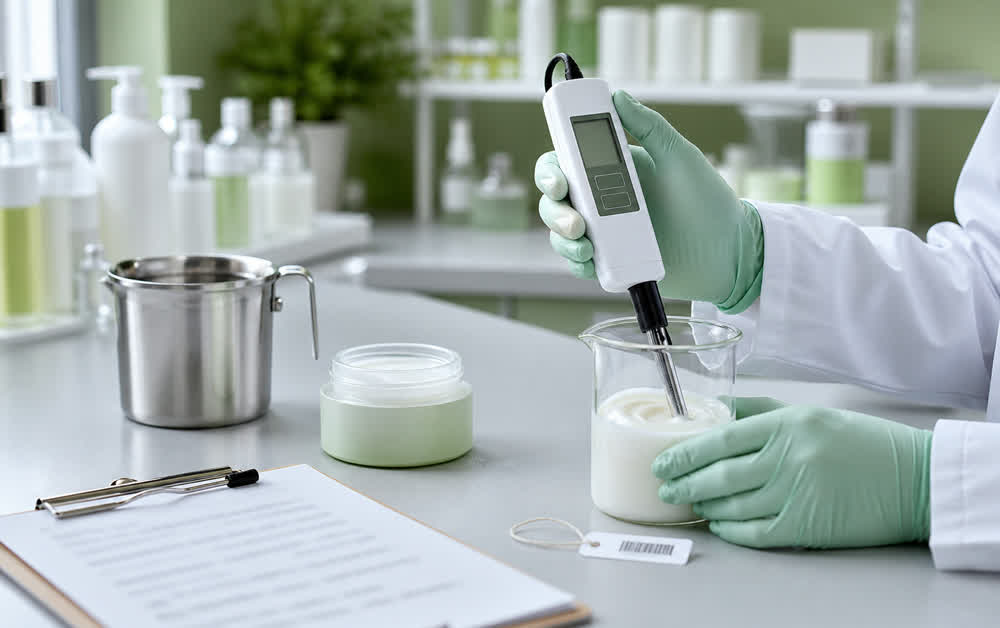
A COA helps buyers with traceability. It is especially useful for distributors, retailers, salon groups, and importers that need batch-level records. A COA is not a complete compliance package. It does not replace the CPSR, PIF, compliant label, or CPNP notification needed for EU sales.
SDS: when is it relevant for a conditioner?
SDS means Safety Data Sheet. The older name is MSDS.
An SDS communicates information about chemical hazards, handling, storage, first aid, and transport. Under US OSHA rules, chemical manufacturers and importers must develop or obtain an SDS for each hazardous chemical they produce or import.
Official source: OSHA Safety Data Sheet requirements
A rinse-off hair conditioner is not automatically a hazardous chemical because it is a cosmetic product. Still, your project may need an SDS for workplace handling, raw materials, concentrated materials, shipping review, or local regulatory processes.
Ask your private label conditioner manufacturer:
- Is an SDS available for the finished product?
- Does it match the final formula and product name?
- Does it show the correct company and emergency-contact information?
- Does the shipment need separate transport documentation?
US private label conditioner compliance: MoCRA basics
For US cosmetic sales, the Modernization of Cosmetics Regulation Act of 2022, or MoCRA, introduced requirements related to cosmetic facility registration and product listing.
FDA states that facilities required to register must renew their registration every two years. FDA also states that the responsible person must list each marketed cosmetic product and update product-listing information annually. Some small-business exemptions may apply.
FDA is clear on one point: cosmetic facility registration and product listing are not FDA approval programs, and FDA does not issue certificates for them.
Official source: FDA cosmetic facility registration and product listing
For a private label conditioner brand, confirm the roles of the manufacturer, importer, distributor, and the company named on the label before launch.
Private label conditioner compliance checklist before bulk production

| Question to confirm | Why you should confirm it |
|---|---|
| Which countries will we sell in? | Requirements differ by market |
| Who is the EU Responsible Person? | EU market placement requires one |
| Who is named on the US label? | This helps clarify MoCRA responsibilities |
| Is the final formula confirmed? | Formula changes can affect documents and safety work |
| Is the INCI list confirmed? | Needed for labeling and safety work |
| Is the packaging confirmed? | Packaging can affect compatibility and documentation |
| What claims will we make? | Claims need suitable evidence and wording |
| Which tests appear on the finished-product COA? | This sets clear batch-release standards |
| Is an SDS relevant to the product or shipment? | It can prevent avoidable logistics delays |
| Who keeps the final files? | Clear ownership prevents gaps before launch |
Work with a conditioner OEM that plans for documents early
A manufacturer should not simply send a folder of certificates at the end of a project. The useful approach is to map the required information to your formula, packaging, labels, market, and sales plan.
SEVICH supports private label conditioner, OEM, and ODM projects with formula selection, packaging, sampling, production, and quality control. Share your target market early so your team can identify the technical information needed for the project.
For related planning help, read our guides to choosing a custom conditioner formulation and the custom conditioner development timeline. You can also review our certifications and compliance information.
Request your private label conditioner document checklist
If you are planning a conditioner launch for the EU, US, or another export market, send us your product details and launch plan. Include your target market, conditioner type, estimated first order quantity, formula support needs, packaging support needs, document needs, and expected launch date.
Request a private label conditioner compliance checklist and MOQ guide.
Frequently asked questions
Is ISO 22716 enough to sell conditioner in the EU?
No. ISO 22716 covers cosmetic GMP. EU sales also require the applicable safety assessment, PIF, Responsible Person, CPNP notification, compliant labeling, and other required steps.
Is CPNP a certificate?
No. CPNP is the EU cosmetic notification system. It is not a certificate or product approval badge.
Who is responsible for the PIF?
For EU cosmetics, the Responsible Person keeps the PIF. Your conditioner manufacturer can provide technical information, but the Responsible Person must ensure that the final file is complete.
Can one CPSR cover every conditioner in a product line?
Usually not. A CPSR relates to a specific product and its safety assessment. Changes to the formula, fragrance, intended use, or other relevant details may require a review.
Does every private label conditioner need an SDS?
Not necessarily. SDS requirements relate to hazardous chemical communication. Confirm with your manufacturer and logistics partner whether an SDS is relevant to the finished product, raw materials, or shipment.
Is FDA registration the same as FDA approval?
No. FDA states that cosmetic facility registration and product listing are not cosmetic approval programs.
What documents should I request before ordering conditioner from a manufacturer?
Start with applicable GMP evidence, the product specification, INCI list, COA scope, stability and microbiological information where applicable, packaging details, SDS availability, and the documents needed for your target market.