Can You Put Leave-In Conditioner on Dry Hair? A Complete Guide for Private Label Brands
Yes, you can put leave-in conditioner on dry hair when the product is designed and labelled for that use. It is most useful for a small amount applied to dry ends, flyaways, or hair between wash days. It is not a universal rule: a rich cream may leave fine hair heavy, while a spray or light lotion may spread more evenly. For a private label brand, the key question is not only whether dry-hair use is possible, but whether the formula, directions, pack, and safety support that promise.
Quick answer for buyers: Build a dry-hair use claim around a lightweight, controlled-dose leave-in. Test it on the hair types you target, then write clear directions such as “apply a small amount to mid-lengths and ends; do not rinse.” Do not simply reuse directions from a rinse-out conditioner.
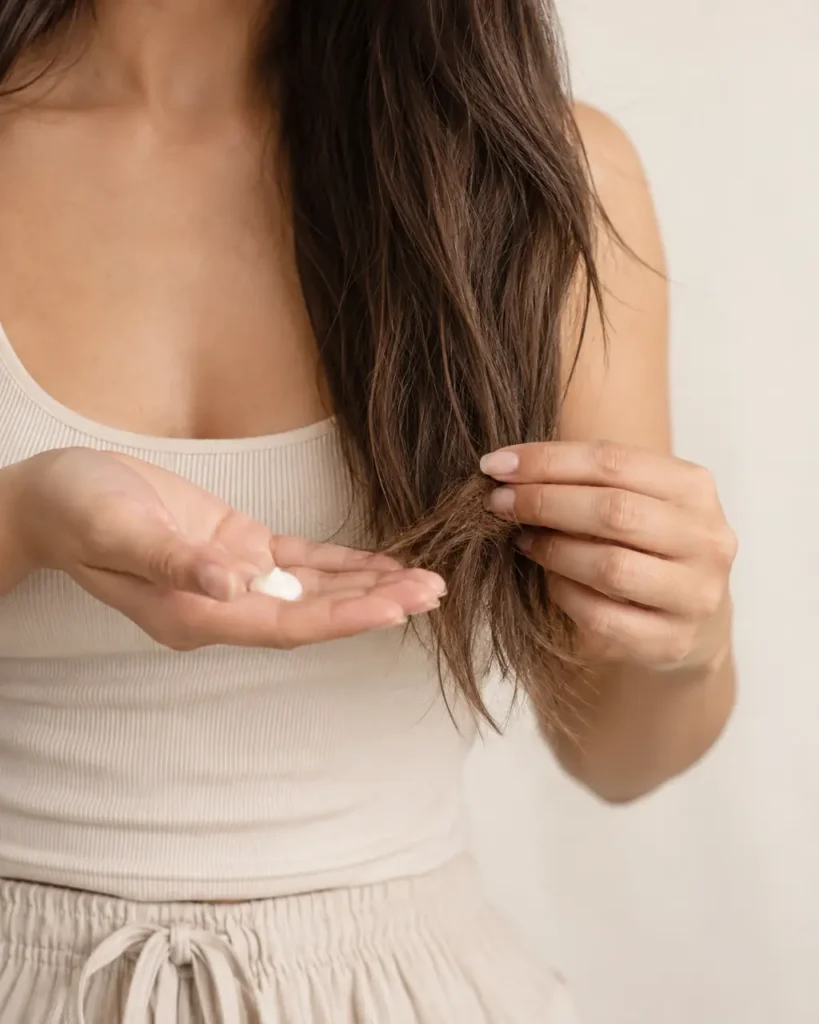
Suggested alt text: “Applying a small amount of leave-in conditioner to dry hair ends.”
What “apply leave-in conditioner on dry hair” means in a product brief
Consumers often ask this question because they want a quick way to soften visible dryness, manage frizz, refresh curls, or improve slip before styling. That does not mean every leave-in conditioner should be marketed as a dry-hair product.
For a manufacturer and brand team, “can you put leave-in conditioner on dry hair” should be turned into a defined use case. The product needs to distribute well without water, feel comfortable at the intended dose, and leave no unwanted residue on the hair types named on the label.
| Intended use | Suitable starting format | What the brand should verify | Direction to consider |
|---|---|---|---|
| Refresh dry ends between washes | Light lotion, serum, or fine mist | Spread, shine, residue, and transfer | Use a small amount on mid-lengths and ends |
| Reduce the look of flyaways | Light cream or serum | Control without a greasy look | Warm a small amount in hands; smooth over the surface |
| Refresh curls | Mist or light lotion | Curl definition, feel, and build-up | Apply in sections; scrunch or reshape as needed |
| Support heat styling | Leave-in with an appropriate, substantiated heat-use claim | Claim support and performance after styling | Follow the exact label directions |
| Detangle very dry hair | Product route depends on hair type | Slip, breakage during combing, and sensory feel | Apply gradually; use a wide-tooth comb if suitable |
The table is a planning tool, not a set of universal consumer directions. Actual use instructions depend on the finished formula, packaging dose, claims, and test results.
Why dry hair changes the formula decision
On damp hair, water helps a leave-in conditioner move through the hair. On dry hair, the product must do more work on its own. A formula that feels smooth after a shower can feel too rich, waxy, or uneven when used later on dry strands.
This is why a private label leave-in conditioner should be assessed in both conditions if the brand wants to mention dry-hair use. During development, buyers should ask the supplier to evaluate:
- Dose control: Can a customer dispense a small, repeatable amount from the chosen pump, tube, or spray?
- Spreadability: Does the product distribute across dry hair without repeated rubbing?
- Sensory finish: Does it leave hair soft and manageable without an oily, sticky, or coated feel?
- Build-up risk: What happens after repeat use between wash days?
- Hair-type fit: Does the result differ on fine, curly, coily, color-treated, or high-porosity hair?
- Packaging compatibility: Does the formula perform consistently with the selected actuator, pump, or sprayer?
A useful distinction: damp-hair benefit versus dry-hair refresh
A leave-in can have both uses, but the messages should be separated. “Apply to towel-dried hair for daily conditioning” is a different promise from “use a small amount on dry ends to refresh the look and feel of hair.” Combining them without clear dosage can lead customers to overapply.
For brands deciding where leave-in fits in a range, see Leave-In Conditioner vs Regular Conditioner: What’s the Difference?. It explains the product-role distinction that should come before claims, packaging, and launch planning.
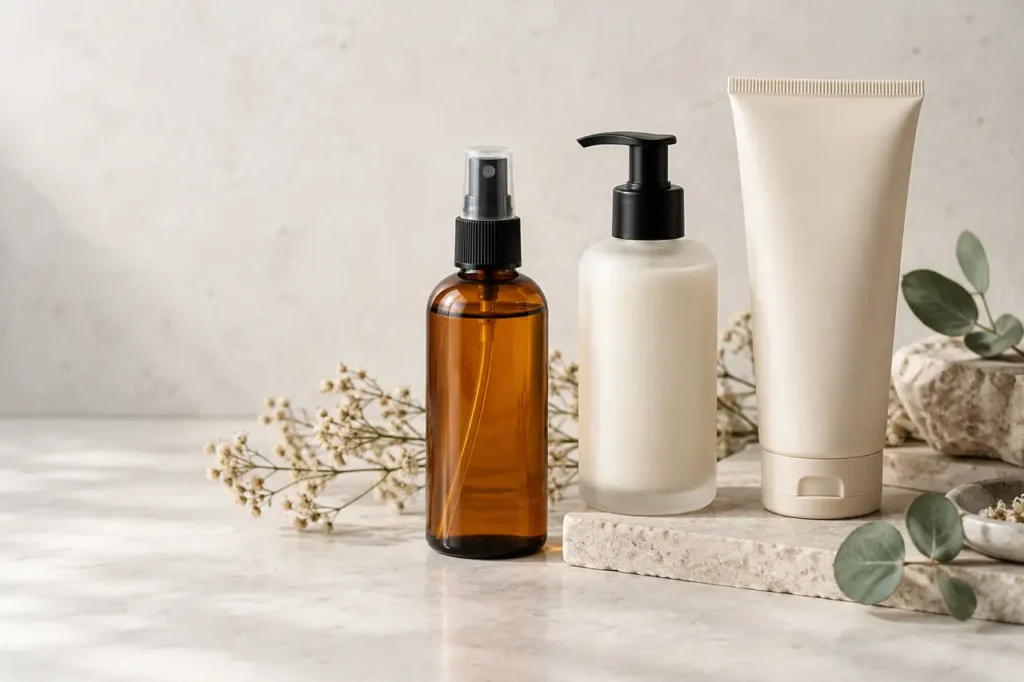
Suggested alt text: “Private label leave-in conditioner spray, pump, and tube packaging formats.”
Can you put leave-in conditioner on dry hair for every hair type?
Not automatically. A brand should avoid saying a product is “for all hair types” unless it has evidence to support that broad statement. It is better to identify the customer and result the formula is designed for.
| Target customer or hair need | Product-development direction | Watch-out for the brief |
|---|---|---|
| Fine or easily weighed-down hair | Low-residue mist or light lotion | Too much oil or rich conditioning agents can make hair look flat |
| Dry, textured, curly, or coily hair | More slip and moisture-feel, with a controlled dose | A heavier format may work well, but needs clear use guidance |
| Color-treated hair | Focus on feel, manageability, and compatibility with the full routine | Do not imply color protection unless the claim is supported |
| Salon styling use | Build around the stylist’s workflow and retail aftercare | Make professional and home-use directions consistent |
| Travel or on-the-go refresh | Pack and actuator should make small-dose use easy | Check leakage, spray pattern, and consumer handling |
The custom conditioner formulation service is the right place to start when the dry-hair use case changes the formula route. A clear brief saves time: include target hair type, desired finish, format, fragrance direction, market, and the exact wording you hope to place on pack.
How private label brands should develop a leave-in for dry-hair use
1. Start with one clear customer moment
Choose the moment you want the product to solve. For example: “a lightweight leave-in for customers who want to refresh dry ends on day two without washing.” That is more useful than a long list of broad benefits.
2. Choose the format after the use case
An aerosol-free mist, pump lotion, squeeze tube, or serum bottle can all be possible choices. The best one depends on the dose, viscosity, application area, and desired finish. A package that gives too much product at once can undermine an otherwise good dry-hair formula.
3. Test the finished formula with the final pack
Formula performance and packaging are connected. Evaluate the finished product as a system: formula, closure or actuator, label, consumer directions, and expected storage conditions. This is especially important for sprays, because spray pattern affects where and how much product reaches the hair.
4. Write directions before artwork is final
Directions are part of product design, not an afterthought. Include amount, application area, whether the product is rinsed out, and key cautions that apply to the product format. For U.S.-market cosmetics, the company responsible for the marketed product must support safety for labelled or customary use; FDA explains this responsibility in its product testing guidance. This article is a sourcing guide, not legal advice.
5. Keep claims proportional to the evidence
“Helps smooth the look of flyaways” is a different claim from “repairs damaged hair.” A brand should review each claim against the formula, available substantiation, test approach, and target market. In the U.S., cosmetics are not generally pre-approved by FDA before sale, but marketers remain responsible for product safety and appropriate labelling. See FDA’s cosmetics overview.
A practical buyer checklist before requesting samples
Use these questions in a private label leave-in conditioner brief:
- Do we want customers to use the product on damp hair, dry hair, or both?
- Which hair type and customer problem are we prioritising?
- What is the maximum amount a customer should use at one time?
- Should the finish be weightless, soft, glossy, defined, or more protective in feel?
- Which pack gives the right dose: fine-mist spray, pump, tube, or dropper?
- What wording will appear on the front and back label?
- Which market will the product enter first, and who will review its safety and compliance route?
- Will the leave-in be sold alone, or as part of a shampoo, rinse-out conditioner, and mask routine?
For broader supplier questions, use this Hair Conditioner OEM Manufacturer buyer checklist. For timing from brief to bulk order, see Custom Conditioner Development Timeline.

Suggested alt text: “Product manager reviewing a private label leave-in conditioner brief and packaging options.”
When should a brand avoid a dry-hair use message?
Avoid the message, or narrow it, when the formula is intended only for wet or towel-dried hair, the right dose cannot be controlled, or the product has not been evaluated for dry-hair feel and build-up. Also avoid broad treatment, repair, or heat-protection language without suitable substantiation.
The honest route is often stronger for a brand. A focused message such as “a light leave-in mist for refreshing dry ends” gives the buyer, retailer, and consumer a clearer expectation than an all-purpose promise.
Request a leave-in conditioner project review
If you are planning a private label leave-in conditioner for dry-hair refresh, send SEVICH a short brief. We can discuss a formula route, packaging format, sample needs, and the information required before a written quotation.
Request a Leave-In Conditioner Project Review
FAQs
Can you put leave-in conditioner on dry hair every day?
It depends on the formula, dose, and hair type. For a brand, repeat-use testing is important before suggesting daily dry-hair use. Directions should tell customers to start with a small amount and apply where needed.
Can a rinse-out conditioner be used as a leave-in on dry hair?
Brands should not assume so. Rinse-out and leave-in conditioners have different intended use directions. A rinse-out product should only be used as a leave-in if the finished formula has been designed, assessed, and labelled for that use.
Which leave-in format is best for dry hair: spray, cream, or serum?
There is no single best format. A fine mist can suit lightweight refresh, while a cream or serum can suit targeted use on dry ends. Choose based on the customer’s hair type, desired dose, and finish.
How should a private label brand test a dry-hair leave-in conditioner?
Review the finished formula in its final pack on the target hair types and at the intended dose. Check distribution, feel, visible residue, build-up after repeat use, pack performance, and whether the directions match real use.
Can we claim that a leave-in conditioner repairs dry or damaged hair?
Only make a claim that you can support for the formula and market. Cosmetic wording about feel or appearance should not be stretched into an unsupported treatment claim. Obtain market-specific regulatory review when needed.
What information should we give an OEM manufacturer for a dry-hair leave-in?
Provide the target customer, use moment, hair type, preferred format, desired finish, fragrance direction, pack size, target market, planned quantity, and any reference products. The more precise the brief, the more useful the sample route will be.