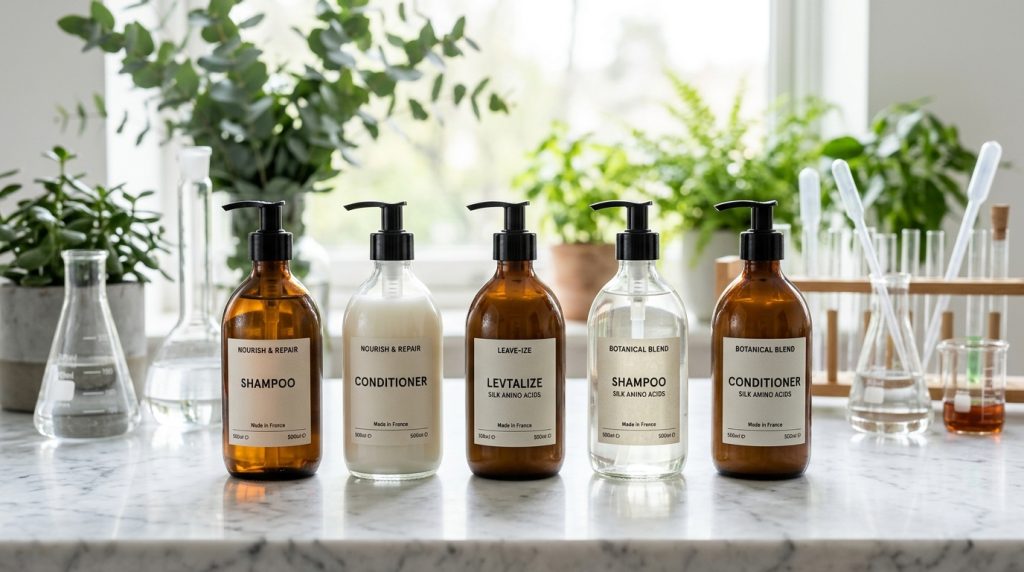
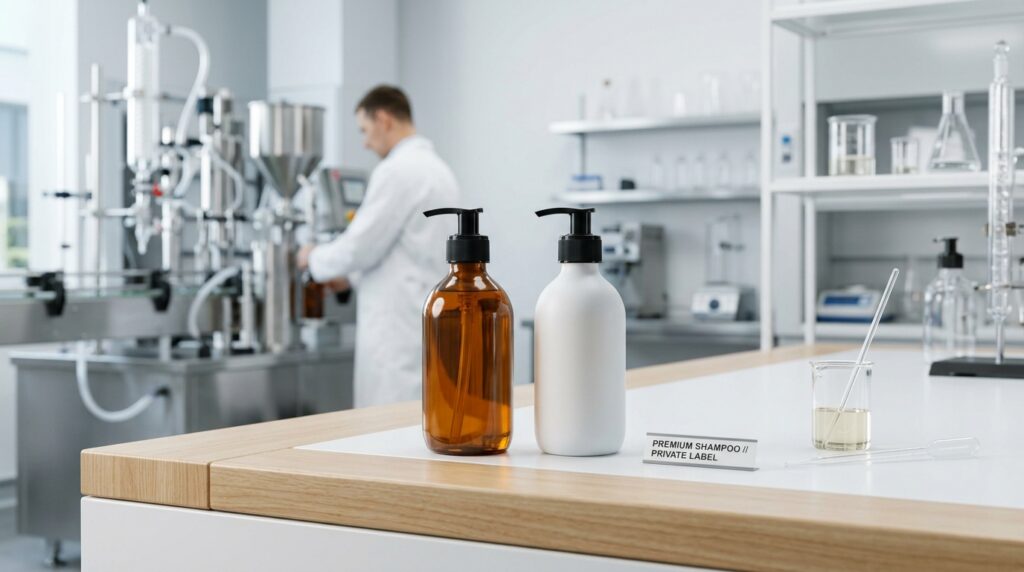
When starting or scaling a hair care line, one of the first questions brand owners ask is: what is the minimum order quantity for custom hair conditioner manufacturing? Understanding your factory’s hair conditioner MOQ helps you plan inventory budgets, control landed costs, and prevent cash flow bottlenecks.
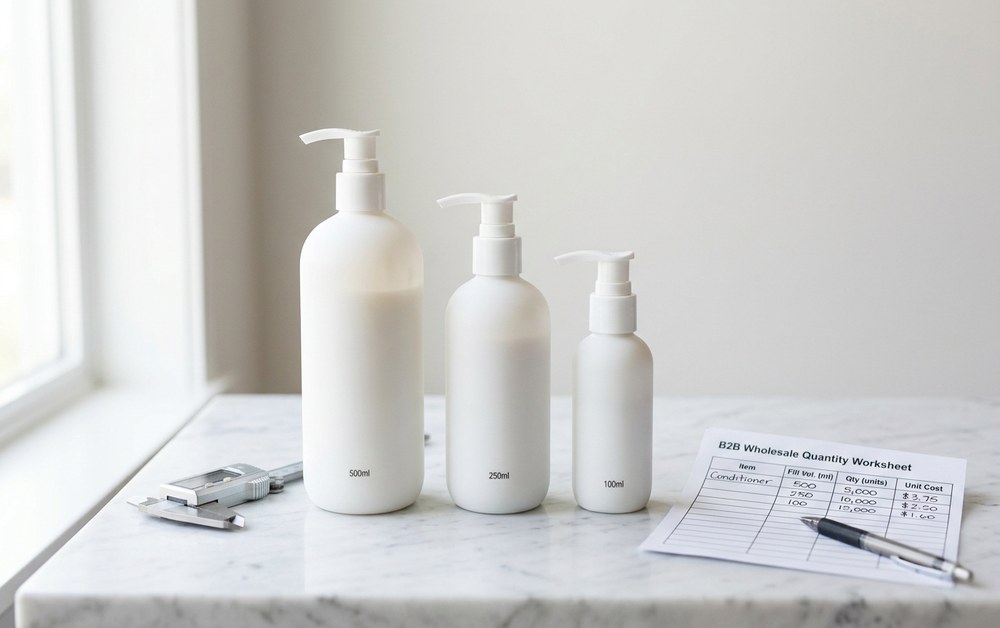
Short answer: Hair conditioner MOQ is determined by three main constraints: minimum batch vessel blending sizes, custom bottle printing run minimums, and packaging supplier component limits. For custom private label OEM projects at SEVICH, the planning MOQ ranges from 2,000 to 5,000 units per SKU, while authorized brand distribution starts at 100 units ($150 USD).
Why understanding hair conditioner MOQ matters for your brand
Minimum order quantity dictates more than just the number of bottles in your first delivery. It directly affects your unit cost, packaging decoration choices, shipping method, and launch timeline. Ordering below a factory’s batch threshold raises unit expenses, while overordering locks up capital in unsold stock.
Before confirming your order, review how manufacturing models impact initial run sizes. For a wider view of available project routes, see our guide on conditioner OEM vs. ODM vs. private label or learn how to choose a hair conditioner OEM manufacturer.
1. What determines hair conditioner MOQ?
Factories do not set minimum order quantities arbitrarily. In contract cosmetic manufacturing, MOQ is driven by three physical and commercial operational limits:
Mixing vessel batch capacity
Industrial emulsification tanks have minimum filling thresholds. For example, a 500-liter jacketed mixing vessel cannot properly homogenize a batch smaller than 300 liters without introducing air bubbles or causing heating inconsistencies. Filling 300 liters into 250ml bottles yields 1,200 units minimum per batch.
Packaging component and print run minimums
While a factory can mix a smaller batch, packaging suppliers set separate run minimums. Stock bottles with paper labels often start at 1,000 units. Custom silk-screen printing, hot stamping, or custom color-injected PCR bottles usually require 3,000 to 5,000 units per print run.
Specialty raw material MOQs
Standard conditioner bases use readily available ingredients. However, if your formula requires bespoke active ingredients like specialized plant stem cells or custom designer fragrances, chemical suppliers require minimum purchasing volumes of 10kg to 25kg.
Authoritative Safety Reference: All raw chemical ingredients and finished formulations must comply with international safety benchmarks established under FDA MoCRA Guidelines and ISO 22716 Good Manufacturing Practices.
Quick comparison: how hair conditioner MOQ varies by production type
Minimum order requirements change depending on whether you choose stock formulas, custom R&D bases, or proprietary bottle molds.
| Production Option | Typical MOQ Range | Primary Bottleneck | Best For |
|---|---|---|---|
| Brand Authorized Distribution | 100 units ($150 USD) | Stock inventory availability | Salon retail, e-commerce test sellers |
| Stock Formula + Stock Packaging | 1,000 to 2,000 units | Label printing run minimums | New brand launches, low-budget entries |
| Custom Formula + Custom Packaging | 2,000 to 5,000 units | Mixing tank volume & silk-screen printing | Established retail & e-commerce brands |
| Bespoke ODM + Custom Molded Bottle | 10,000+ units | Blow-molding tool setup limits | Global retail chains, high-volume brands |
2. How bottle size and formula type affect order minimums
Fill volume plays a key role in batch yield. Understanding liquid math helps you align bottle choices with factory tank capacities.
For example, a single 1,000-liter batch yields:
- 4,000 bottles for a standard 250ml daily care conditioner.
- 2,000 bottles for a 500ml leave-in spray or family-size bottle.
- 1,000 bottles for a 1,000ml salon backbar bottle.
Formula viscosity also matters. High-viscosity hair masks require heavy-duty piston fillers that need longer setup times, whereas lightweight leave-in sprays flow quickly through liquid filling nozzles. To compare formulation choices, review our guide on leave-in conditioner vs. regular conditioner.
3. 4 strategies to manage MOQ and lower upfront capital
If high MOQ limits threaten your launch budget, use these four practical strategies to negotiate manageable terms:
- Share a formula base across SKUs: Use one master conditioner base formula and divide it into two scent variations (e.g., Lavender and Argan). This fulfills the mixing tank minimum while offering product variety.
- Choose stock bottle shapes with custom labels: Using factory-stocked bottle molds eliminates custom container MOQs, keeping your initial order down to label minimums (1,000 to 2,000 units).
- Stagger delivery schedules: Ask your manufacturer to produce a larger batch to meet component MOQs, then ship inventory in split shipments over 3 to 6 months.
- Start with brand distribution: Test market demand using established brand inventory before investing in custom private label runs.
To review production lead times and approval steps, see our custom conditioner development timeline or explore our complete OEM/ODM services.
How SEVICH handles hair conditioner MOQ and production
SEVICH works with beauty brand owners, salon chains, importers, and e-commerce retailers to find the right balance between order size and unit cost. We offer over 3,000 stable pre-tested formulations, custom scent development, and eco-friendly PCR bottle options.
For custom private label projects, SEVICH uses a planning MOQ range of 2,000 to 5,000 units per product. For buyers testing new sales channels, our authorized brand distribution program allows starter orders from 100 units ($150 USD).
Our 10,000 m² facility in Guangzhou operates 20 automated production lines with 300 employees. Certified under GMPC, ISO 22716, ISO 9001, FDA, CE, and Leaping Bunny Cruelty-Free, SEVICH exports over $15M annually to North America, Europe, and global markets.
Request a hair conditioner MOQ and production review
Send SEVICH your target product concept, hair type focus, formula ideas, fill size, packaging preferences, target market, and target launch date.
Our project team will review suitable formula bases, component minimums, sample lead times, and unit pricing tiers for your target volume.
Frequently asked questions
What is a normal MOQ for private label hair conditioner?
Normal private label conditioner MOQs range from 2,000 to 5,000 units per SKU for custom formulas and packaging. Stock formula orders with standard labels often start at 1,000 units, while authorized brand distribution starts at 100 units.
Why do packaging suppliers have separate MOQs from liquid filling factories?
Bottle manufacturers and label printers require separate machine setup times, print plate calibrations, and raw material purchases. A filling factory must align its batch size with packaging supplier minimums.
Can I order 500 units of custom formulated hair conditioner?
Producing 500 units of a fully custom formula is technically possible but inefficient. Small batch setup fees and raw material surcharges will significantly increase your unit cost. Using a factory’s stock formula base is a more economical choice for small quantities.
How does bottle volume impact minimum order quantity?
Larger fill volumes (e.g., 500ml or 1,000ml) reach factory mixing vessel batch minimums with fewer total bottles. Smaller travel sizes (e.g., 50ml or 100ml) require higher bottle counts to fill the same mixing vessel.
What happens if I cannot meet custom bottle printing MOQs?
If custom silk-screen printing requires 5,000 units but your budget only covers 2,000 bottles, you can use factory-stocked bottles with waterproof pressure-sensitive labels, which have lower print run minimums.
How long does custom conditioner production take once MOQ is met?
At SEVICH, rapid custom formula sampling takes 5 to 7 business days. Bulk production and filling take approximately 25 business days after sample approval, deposit receipt, and packaging material arrival.